
CONTENTS
Backpacking Sri Lanka Guide: From Planning to Budget to Itinerary
Cabin Backpacks - Made for All Airlines
View All


Explore the CabinZero ADV Collection
View All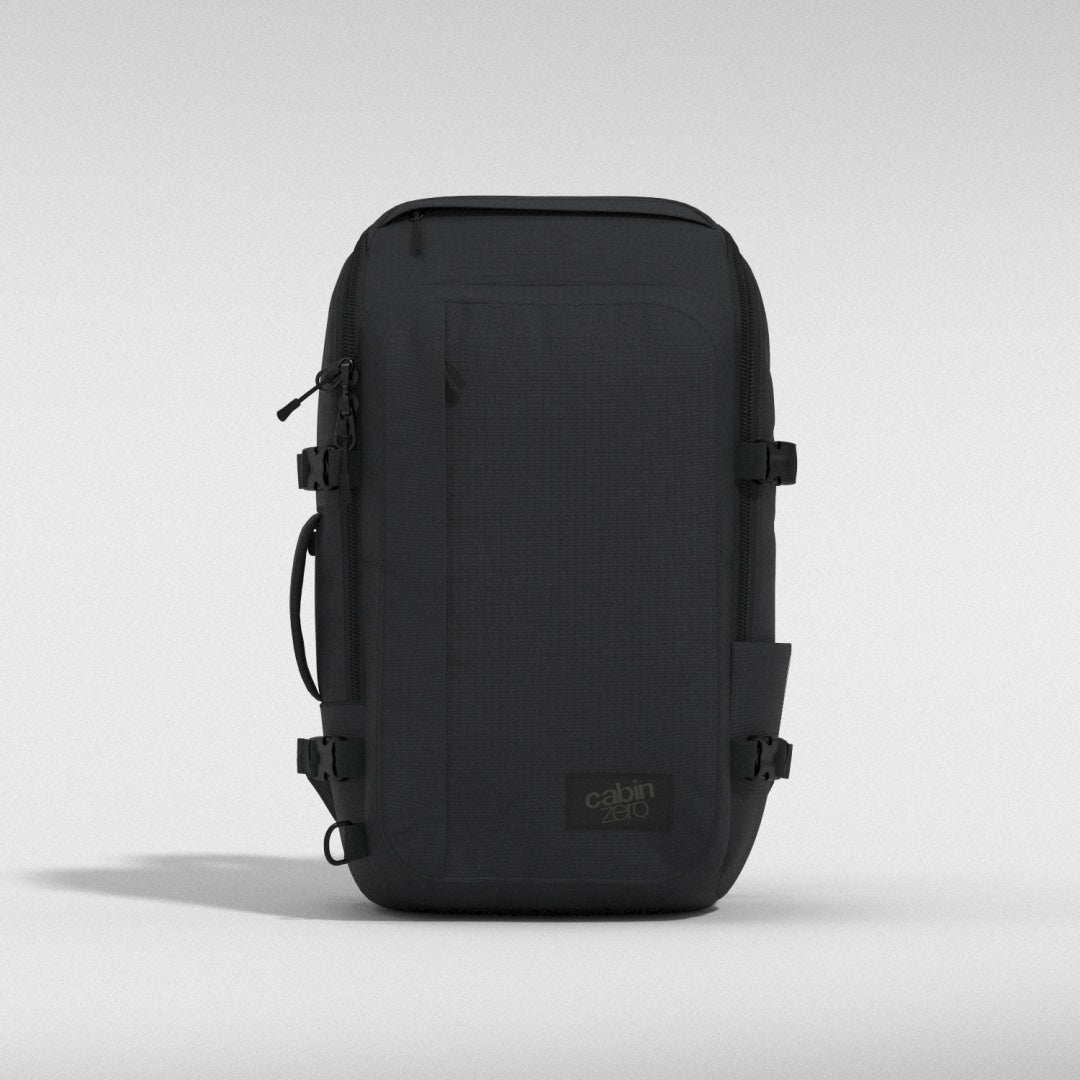


Thinking about backpacking in Sri Lanka? That sounds like a brilliant idea. From the bustling streets of the capital and gruelling treks in the central highlands to fantastic surf on the south coast, Sri Lanka really does have it all. Add to that the affordable day-to-day costs, and it is easy to see why so many solo backpackers fall in love with the island.
Before you start worrying about building your backpacking packing list for Sri Lanka, take a moment to slow down and read this guide. Inside, you will discover realistic route information and what to do at each stop. You will also find simple budget insights to help you prepare for a smooth and memorable journey to this gem of the Indian Ocean.
Sri Lanka Quick Facts for Backpackers
Let’s start with a few basics. Planning a backpacking trip to Sri Lanka is much more manageable when you have a rough idea of how things work on the ground. Knowing the visa rules, the local currency, or how much you might spend each day helps you feel more prepared before you arrive.
|
Category |
Information |
|
Currency |
|
|
Visa |
|
|
Daily Budget |
|
|
Best Time to Go |
|
|
Transport |
|
|
Accommodation |
|
|
Sim Card |
|
Is Sri Lanka Backpacker-Friendly?

The country is compact but full of things to explore. Photo by Galyna Andrushko - stock.adobe.com
Yes, very much so. Sri Lanka packs an extraordinary amount into a small island: ancient ruins, tea-covered hills, wildlife, beaches, and one of the most scenic train rides on earth.
It's affordable, easy to get around, and has a well-worn backpacker circuit that makes backpacking in Sri Lanka a unique experience. Not every corner is equally welcoming, but for the independently minded traveller, Sri Lanka earns its place on the list.
Pros
-
A daily budget of £20–40 is realistic if you eat locally, use buses and trains, and stay in dorms.
-
Hostels are solid and social, especially in Ella, Arugam Bay, and Mirissa.
-
Public transport covers almost the whole island.
-
English is widely spoken in tourist areas.
-
The island is compact enough to cover serious ground in two to three weeks.
-
Wildlife encounters are genuinely outstanding.
-
Reliable internet is easy to find, which also suits digital nomads and work-travel travellers
-
PickMe app (Sri Lanka's Uber equivalent) takes the stress out of getting around cities.
Cons
-
Attraction entry fees have risen sharply — Sigiriya alone costs $30.
-
Women travelling solo report varied experiences.
-
Private rides, such as Tuk-tuks and taxis, can add up quickly.
-
Tourism infrastructure is not there yet.
Sri Lanka vs. Other Backpacker Destinations
Similar price range, but Sri Lanka wins on wildlife and landscape variety. Vietnam has better backpacker infrastructure and a cleaner north-to-south route.
Thailand is easier and more developed. Sri Lanka is cheaper, wilder, and far less crowded. Beaches are comparable; jungle and safari experiences go to Sri Lanka.
The USA can run five to ten times more expensive daily. For nature, the USA has scale; Sri Lanka has density.
The closest match. Both offer jungle, beaches, and wildlife at similar price points. Malaysia edges it on food and ease; Sri Lanka edges it on dramatic landscapes and raw adventure.
Both island nations, both beautiful, both affordable. The Philippines wins on beach variety and island-hopping; Sri Lanka wins on cultural depth, wildlife, and not spending half your trip on ferries.
Japan costs roughly three to four times more per day. Both are rich in nature and culture, but Japan rewards careful planners with budgets to match. Sri Lanka rewards travellers who pack light and stay flexible.
Step 1: Planning Your Sri Lanka Backpacking Route

Situated in Ella, in Sri Lanka's central highlands, is the iconic Nine Arches Bridge. Photo by surangaw on Adobe Stock
Sri Lanka may be small on the map, but it packs in an incredible amount of variety. That is why it is worth taking some time to plan, rather than jumping between famous spots without much thought. How long should you spend in Sri Lanka? Which route will let you see culture, nature and beaches without feeling rushed? These are the kinds of questions that help shape a better trip.
Which Month Is The Best Month To Visit Sri Lanka?
Start with timing. Sri Lanka has distinct climate zones and monsoon seasons that affect different parts of the island at different times of the year.
If you are travelling between December and early April, the south and west coasts, along with the central highlands, are usually at their best. Places like Kandy, Nuwara Eliya and the wider Hill Country tend to be drier and sunnier during this period. If your trip falls between
In May and November, the east coast often has better weather, making spots such as Trincomalee and Arugam Bay more inviting.
Decide Your Route
From our experience, a good route comes down to a few basic choices. This includes when you want to travel, which direction feels right for you, and the places you would really regret missing based on your own backpacking style.
-
If ancient sites are high on your list, the Cultural Triangle is hard to skip. Sigiriya, Polonnaruwa, Anuradhapura and Dambulla are rich in history. The temples, Buddha statues, the remains of ancient royal cities, and striking rock formations will satisfy any history buffs.
-
If you are drawn to the sea and water-based activities, the southern coast is a great place to chill out. Mirissa is known for surfing and whale watching, Dalawella for its calm lagoon and sea turtles, and Hikkaduwa for its coral reefs. These beach towns are also easy to reach from Colombo.
-
If cooler temperatures and green landscapes sound more tempting, head inland to the Hill Country. Around Kandy, Nuwara Eliya and Ella, you will find misty mountains, waterfalls and rolling tea plantations.
When it comes to direction, many backpackers find it works well to head north first and then travel south. This gives you a nice balance of old culture, mountain scenery and beach time.
The route often forms a loose Sri Lanka travel loop: starting near Colombo in Negombo, moving up to the Cultural Triangle around Sigiriya and Dambulla, then climbing into the hills through Kandy, Nuwara Eliya and Ella, before winding down to the southern coast at places like Mirissa and Galle.
Before heading back to Colombo, you can add a wildlife stop at Yala or Udawalawe, or spend a few extra days on the east coast in Arugam Bay or Trincomalee. How much you include really depends on your time and energy.

Arugam Bay is located in the Ampara District on Sri Lanka’s south coast. Photo by insomniafoto on Adobe Stock
How Many Days to Backpack Sri Lanka?
Sri Lanka is not the kind of place to rush through, at least that is how it felt to us. Life moves a little slower here, and you will probably spend more time on your feet than you expect.
Because of that, we usually recommend giving Sri Lanka at least 14 days. A good balance is to spend 2 to 3 days in each key stop, such as Sigiriya, Kandy and a couple of beach towns, so you have the chance to enjoy them without feeling hurried.
That said, if your schedule is tighter, it is still possible to see Sri Lanka in around 10 days or even less.
The journey will be faster paced, so it makes sense to focus on a handful of Sri Lanka highlights.
You might choose Colombo for culture, the tea country around Ella, a safari in Udawalawe, and then slow things down again with some beach time in Weligama.
|
Question |
Quick answer |
|
How long do you need? |
10-14 days work, but 3 weeks is more relaxed. |
|
Best route for first-timers |
Negombo → Sigiriya/Dambulla → Kandy → Nuwara Eliya → Ella → Udawalawe → Mirissa/Galle → Colombo |
|
Daily budget |
Around £30–£40 for comfortable backpacking; more for private drivers and guided tours. |
|
Best for |
Culture, trains, hikes, tea country, beaches, surfing and safari. |
|
Biggest mistake |
Trying to cover both coasts and all highlights in 10–14 days. |
|
Best travel style |
Slow loop route with light luggage. |
Example of a 2-Week Itinerary
On our most recent trip, we spent two weeks, and a little longer, travelling around Sri Lanka on a circular route, much like the one described above. The outline below simply gives you a feel for where to stop and how the journey can flow from one place to the next.
Day 1: Colombo to Negombo
Arrive at Bandaranaike International Airport and head to nearby Negombo to settle in. Take a short walk around the town and enjoy the first proper Sri Lankan meal of rice and curries.
Day 2 to 3: Negombo to the Cultural Triangle (Sigiriya and Dambulla)
Travel inland to the Cultural Triangle. Spend your time climbing Pidurangala Rock for sunrise, visiting the Dambulla Cave Temple, and, if it appeals to you, taking a hot air balloon ride to see the countryside from above.
Day 4: Polonnaruwa
Set aside a day to explore the ancient ruins of Polonnaruwa. Later on, head to Minneriya National Park to look for wild elephants. Kaudulla National Park is another good alternative, depending on the season.

The Ancient City of Polonnaruwa, Sri Lanka. Photo by hnphotography on Adobe Stock
Day 5: Kandy
Arrive in Kandy and visit the Temple of the Sacred Tooth Relic early in the morning. Later, head up to the Buddha statue on Bahirawa Kanda hill, stroll around Kiri Muhuda Lake at sunset, and finish the day with something local from Kandy Central Night Market.
Day 6: Kandy to Nuwara Eliya by train
Take a morning train from Kandy Railway Station and get off at Nanu Oya. This is one of those journeys where the ride matters as much as the destination, as the views slowly shift from busy towns to misty Nuwara Eliya tea plantations.
Day 7: Nuwara Eliya to Ella
Continue by train from Nanu Oya to Ella, passing through valleys and waterfalls. You should arrive in Ella by the afternoon.
Day 8: Enjoy Ella a little more
Start the day with an early walk up Little Adam’s Peak. Later, take a tuk tuk to Ravana Waterfall, visit the Nine Arches Bridge, and spend the rest of the day wandering through nearby villages and open fields.
Day 9 to 10: Ella to Udawalawe
Travel by taxi from Ella towards Udawalawe, stopping at Diyaluma Falls along the way. In Udawalawe National Park, join a jeep safari to see elephants in the wild and visit the Udawalawe Elephant Transit Home nearby.
Day 11 to 13: Mirissa on the south western coast
Swim, relax on the beach, and enjoy sunset walks across such places as Coconut Tree Hill and Secret Beach. If you are visiting between November and April, you can also join a Mirissa whale watching trip. Take one day to explore nearby Galle and walk around Galle Fort with its old streets and colonial buildings. Evenings are best spent at a small beach bar.

Galle Fort in the Bay of Galle, Sri Lanka. Photo by Richie Chan on Adobe Stock
Day 14: Back to Colombo
From Mirissa, book a taxi straight to Colombo airport via the southern expressway and head home.
Because this two-week journey involved a mix of weather and constant movement by train, bus, tuk-tuk, and taxi, we found it more convenient to travel with everything in one backpack.
A CabinZero 40L+ worked well for us, as it was large enough for the essentials, stayed within cabin size limits, coped well with light rain, and included an Okoban tracking tag, which was reassuring in busy airports.
Step 2: Setting Your Daily Budget for Backpacking Sri Lanka
|
Category |
Budget |
Midrange |
Luxury |
|
Accommodation (per night) |
1,800 – 7,700 LKR |
7,200 – 23,000 LKR |
23,000 – 38,000 LKR (up to higher) |
|
Food (per day) |
~3,000 LKR |
~5,000 – 7,000 LKR |
~10,000 LKR (Western style + drinks) |
|
Transport (per day, typical) |
~100 – 300 LKR |
~300 – 1,500 LKR |
~8,000 LKR (private driver whole day) |
|
Activities (per person, typical) |
Free – 1,500 LKR |
1,500 – 12,000 LKR |
16,000 – 46,000 LKR |
The cost of a typical day in Sri Lanka depends on how you like to travel and the activities you choose.
We spent around 12,400 to 15,500 LKR a day, roughly 30 to 40 GBP.
This included private rooms, transportation by mainly bus and tuk-tuk, a safari expedition, and frequent meals at local restaurants.
With this kind of budget, we felt comfortable throughout the journey and rarely had to worry about money.
If you prefer nicer hotels, guided tours and a private driver, it is safer to plan for at least 37,200 LKR per day.
Below, we share a closer look at what we spent on accommodation, food, transport and activities during our time in Sri Lanka. Flights are not included, as prices can vary a lot depending on where you are travelling from.
Accommodation
Hotels, guesthouses, and hostels in Sri Lanka are generally inexpensive. As a couple, we stayed in comfortable guesthouses and small hotels with Wi-Fi, breakfast and pleasant rooms for under 7,200 LKR per night. Even more stylish hotels or private villas are often priced between 23,000 and 38,000 LKR a night.
For those backpacking on a tighter budget, there are plenty of affordable options as well. Private rooms with en suite bathrooms in homestays can start from around 1,800 to 7,700 LKR per night. Staying a little outside the main tourist areas and asking for discounts on longer stays can help keep costs down. We often used Booking, mainly because of its free cancellation option.

An accomodation with traditional Sri Lankan decoration. Photo by Saman Weeratunga on Adobe Stock
Transport
And, now, let’s talk about the cost of getting around Sri Lanka.
-
Tuk-tuks are everywhere and work much like taxis. For short rides, you will usually pay around 100 LKR per kilometre, with lower rates for longer distances. If you want a driver to take you around for the whole day, a price of about 8,000 LKR is generally reasonable.
-
There will be times when trains do not take you exactly where you need to go, and you will need to switch to a bus for the final stretch. Short trips on local buses in Sri Lanka usually cost between 70 and 100 LKR. Longer journeys, such as travelling from Colombo to Nuwara Eliya, cost around 500 to 850 LKR.
-
Trains in Sri Lanka are not just a way to get between major cities, but an experience in themselves. Routes like Colombo to Badulla and Kandy to Ella pass through hill towns, valleys and wide stretches of tea plantations. There are three classes on Sri Lankan trains, with tickets ranging from 1,500 to 6,000 LKR when booked online. First class has air conditioning and reserved seats. Second class is more open and still comfortable. The third class can be busy and a bit chaotic.
Food
The cost of food in Sri Lanka is another big plus. Rice and curry, roti and chapatti are everyday foods in Sri Lanka, and they quickly become part of daily travel life too. We mostly ate at small, local places and were pleasantly surprised by how cheap and tasty the food was. A simple meal at these spots often costs around 250 LKR.
As breakfast is usually included where you stay, eating at street stalls keeps food spending fairly low. By local places, we mean the ones full of Sri Lankans rather than tourists. Eating this way, you can get by on around 3,000 LKR a day. If you prefer Western-style restaurants and add a few drinks, expect your daily food budget to climb closer to 10,000 LKR.

A simple rice and curry meal in Sri Lanka usually costs under 300 LKR. Photo by Cherish on Adobe Stock
Activities
One of the nicest things about backpacking Sri Lanka is that many experiences are free, yet still very enjoyable. We wandered into small local temples such as Gangaramaya Temple in Colombo and Muthiyangana Temple in Badulla without paying an entrance fee, or sometimes just leaving a small donation. Walks like Ella Rock, Little Adam’s Peak, and a stroll around Galle Fort cost nothing at all.
We did not spend much on expensive activities during our stay. Our main splurge was a safari at Udawalawe National Park, which cost about 23,000 LKR per person for a half-day jeep ride.
We are not experienced surfers, but surfing is a big part of Sri Lanka’s appeal, so we gave it a go in Weligama, near Mirissa. We hired boards right on the beach for 300 LKR per hour. In busier spots like Hiriketiya, prices tend to be slightly higher, usually around 450 LKR an hour.
Here are a few popular activities in Sri Lanka, with rough costs to give you a better idea:
-
Climbing Sigiriya Rock Fortress or Pidurangala Rock: 10,800 LKR or 1,500 LKR
-
Single scuba dive, including equipment: 12,300 to 17,600 LKR
-
Whale watching tour (Mirissa): around 16,000 LKR
-
Cooking class (Kandy): 6,200 to 7,700 LKR
-
Visiting the Temple of the Sacred Tooth Relic (Kandy): 1,500 to 2,000 LKR
-
Private half-day safari in Yala National Park: 25,000 to 46,000 LKR
Step 3: The Top "Must-Do" Backpacker Adventures
No matter what you are into, Sri Lanka always has something to keep you curious and excited. Below are a few activities that really stand out and are well worth making time for during your trip.
Ride the Kandy to Ella Train

A train rides through Sri Lanka’s tea plantations. Photo by Kate on Adobe Stock
You may have heard some travellers say the Kandy to Ella train journey is overrated. It can be crowded, hot, and quite hectic, especially during peak season. That may not sound tempting at first, but trust us, there are very few train rides in the world that take you so close to dense jungle, rolling tea plantations, and rushing streams, all for a ticket that costs between 300 and 3,000 LKR (around 0.72 to 7.21 GBP).
To us, the most scenic part of the journey is between Nanu Oya and Ella. Along the way, the train passes St Clair’s Falls and Devon Falls, often known as Sri Lanka’s twin waterfalls. Try to get a window seat or stand near an open doorway and simply take it all in as the train rolls past.
Third class is the cheapest option and, for many, the most memorable. It is lively and full of character, with the chance to lean out of the open doors (carefully, of course) and capture those classic train photos. If comfort matters more to you, first or second class offers a smoother ride.
Climb a Rock Fortress

The aerial view of Sigiriya Rock. Photo by Stephen on Adobe Stock
We love big rocks. If you do too, Sigiriya Rock Fortress, or Lion Rock, is likely to leave a lasting impression. It is more than just a massive rock rising out of the jungle. Back in the fourth century (yes, that long ago), a king chose this spot for his capital, turning the rock into a fortress city with palaces, gardens, and clever water systems.
These days, the climb takes you up more than 1,200 steps, passing ancient frescoes and the lion’s paws carved into the stone. It is definitely a workout, but once you reach the top and look out over the forest below, the history and scale of the place really sink in.
If paying around 35 dollars, or 26 GBP, just to climb a rock feels a bit high for your budget, or if you would rather admire Sigiriya from a distance than climb it, Pidurangala Rock right next door is a great alternative. We visited both, and for us, Pidurangala is perfect at sunrise, while Sigiriya is best saved for sunset.
Hike in the Hill Country

Stunning scenery around Little Adam’s Peak. Photo by ggfoto on Adobe Stock
Ella is a lovely place to base yourself if hiking in Sri Lanka’s Hill Country is on your list. The town is surrounded by green hills and tea plantations, with a few walking routes that are free to explore. One of the most popular experiences here is hiking Little Adam’s Peak, a gentle and rewarding walk, while Ella Rock offers a longer route for those looking for more of a challenge.
We started our walk to Little Adam’s Peak from a small path near the Flower Garden café. The trail winds through tea fields, with open views of Ella Rock along the way, before the final short climb. There is a main peak and a smaller one, and both offer wide views across the valley and the hills in the distance.
The walk to Ella Rock usually begins near Ella railway station. From there, you follow the tracks towards Kandy, crossing a small bridge and passing a waterfall and a few tea plantations before starting the climb up to the top. There is not much shade along the way, so starting early helps. Set aside around 3 hours for Little Adam’s Peak and about 4 hours for Ella Rock, including the walk back.
Surf in the South Coast

Surfing at Mirissa Beach at sunset. Photo by Matthew on Adobe Stock
The south coast of Sri Lanka is a real playground for surfers. Waves stretch along the shoreline from Hikkaduwa in the west to Arugam Bay in the east, with spots to suit everyone and surfers coming from all over the world.
If you are new to surfing in Sri Lanka, or simply want something more forgiving, as we did, Weligama is a classic choice. This long, sandy beach is about 2 hours south of Colombo by train and is known for its warm water and tender waves.
There are plenty of small surf schools right on the beach. A beginner lesson usually lasts a little over an hour and focuses on the basics, such as getting up on the board, paddling for waves, and feeling comfortable in the water.
For those who prefer something a bit more exciting, head to the nearby beaches of Ahangama (Kabalana), Midigama, and Coconut Point (Gurubebila). In these destinations, waves are heavier and quicker breaking over reefs and are a heaven for advanced surfers.
Go On a Safari in Udawalawe or Yala

The whole country is like a big safari. Photo by Chalabala on Adobe Stock
Udawalawe National Park, close to the town of the same name, is a place that deserves a spot on any Sri Lanka itinerary, no matter the time of year.
The park is home to a large population of Asian elephants, with more than 500 believed to live here. Other sightings will include wild boar, deer, crocodiles, innumerable bird species, and, if you're very lucky, a leopard. If watching elephants slowly roaming through open grassland and scrub forest sounds attractive, this park rarely disappoints.
We visited Udawalawe while travelling between Ella and the towns along the south coast. It also works well as a day trip from places like Mirissa, Tangalle, or Dickwella, without straying too far from the main travel route.
If Udawalawe is the place for seeing wild elephants, then Yala National Park, on the south coast and about 65 kilometres away, is well known for leopard sightings. We were lucky enough to spot one during an early morning safari, even if it was through binoculars. Yala is also home to elephants, sloth bears, sambar deer, and several species of monkeys.
To be fair, both national parks offer a similar safari experience. Even so, we personally preferred Udawalawe, mainly because it felt less crowded and made wildlife spotting a little easier.
Stop By a Tea Factory
Damro Labookellie tea factory, Nuwara Eliya. Photo by Volodymyr Shevchuk on Adobe Stock
Tea is something Sri Lanka is truly proud of, and nowhere does this better than the Nuwara Eliya tea plantations. Located high up in the mountains, this is a town encompassed by tea gardens, providing leaves to some of the world’s most renowned tea brands. Many of the tea factories around here welcome visitors and offer a chance to learn how tea goes from the plant to our cup.
We decided to visit Mackwoods Tea Plantation, also called Damro Labookellie. Founded back in 1841, it is one of the oldest tea estates in the country. The plantation is about half an hour from the centre of Nuwara Eliya, and getting there by local tuk-tuk was straightforward.
The visit itself is free, and so are the tea tastings. A guide walks you through each step, from how and when the leaves are picked to how they are dried, rolled, and packed. At the end, you get to try a wide range of teas, nearly 20 in total.
Step 4: Getting Around the Teardrop Isle
Sri Lanka is a country best explored overland. It is compact and full of scenery, so domestic flights are rarely needed. During our 2-week itinerary in Sri Lanka itinerary, we mainly relied on tuk-tuks, buses, a few longer train journeys, and the occasional taxi to make our way around.
Colombo has a well-connected railway network, with trains running across much of Sri Lanka. Routes head east towards Kandy and Nuwara Eliya, and north to places like Anuradhapura and Jaffna.
Delays, of course, are unavoidable, but isn’t that a common risk on most railways everywhere? Beyond the famous Kandy to Ella line, another route worth mentioning is the coastal train from Colombo to the city of Galle. This one runs alongside the Indian Ocean and offers lovely sea views.

Tuk-tuks are cheap and can be found almost everywhere in Sri Lanka. Photo by Chalabala on Adobe Stock
Buses can fill in the gaps where trains do not reach. Public buses, run by the Sri Lanka Transport Board and the Central Transport Board, are very cheap but not the most comfortable. If you are happy to pay a little extra for air conditioning, private buses, often painted blue, pink, or green, are a better option.
For short distances, tuk-tuks are hard to beat. In larger cities like Colombo and Kandy, they can be booked through the PickMe or Uber app in Sri Lanka, which means the price is fixed and there is no need to negotiate.
In smaller towns, you will usually flag one down on the street. Although tuk-tuks should run on a meter, it is advised to agree on the price before setting off.
It is also possible to rent a car or motorbike in Sri Lanka, as long as travellers have an International Driving Permit. However, this was not something we felt keen on.
Traffic can be heavy around popular sights, and during monsoon season, rural roads can become muddy, flooded, or unsafe.
In case you want a more flexible route without the stress of driving yourself, hiring a car with a driver is a good alternative. Most places to stay can help arrange this for you.
Step 5: Visas, Safety, and Avoiding Scams
Before flying into Bandaranaike International Airport, you will need to have an Electronic Travel Authorisation, or ETA. It’s best to apply online at eta.gov.lk before your trip, as sorting it out on arrival does not always run as smoothly.
Sri Lanka travel insurance is something we really recommend, even if you are generally healthy. Medical care can be costly without it, and bills can quickly run into thousands of pounds. When buying a policy, take some time to read the details carefully. Make sure you know which activities are covered and whether there are extra charges for things like riding a motorbike or surfing.
Sri Lanka is normally a safe country with low levels of violent crime, but small thefts do happen, especially in busy markets, train stations, and popular tourist spots.
Keeping your valuables in a secure shoulder bag or bum bag and wearing it where you can see it helps a lot. Also, avoid showing expensive jewellery, watches, and large amounts of cash while walking around.
As with most destinations, there are a few common scams in Sri Lanka to be aware of:
-
Tuk-tuk and taxi fares: Always ask for the meter or agree on a price before you get in. If possible, use apps like PickMe or Uber to avoid any awkward bargaining.
-
Offers from strangers: Be cautious if someone you do not know offers help, suggests a tour you did not plan, or pushes a deal that sounds a bit too good. A polite “no, thank you” usually does the trick.
-
Gems and herbal products: Only buy these from licensed or trusted shops, and take your time to check what you are being sold.
-
ATMs and card payments: When backpacking Sri Lanka, it is safer to use ATMs located inside banks or hotels. When paying by card, try to keep it within sight at all times.
-
Drinks: Avoid accepting any drinks that are offered to you by a stranger. Keep in mind that drinks in Sri Lanka can be stronger than in the UK, as measures are not always used.
Other Backpacking Tips
People in Sri Lanka are broadly kind and welcoming. We did not experience any serious issues with behaviour or communication during our stay. Still, it never hurts to be prepared. The tips below can help you blend in more naturally with local life.
-
Respecting Buddhist culture is very important. Visible Buddha tattoos can sometimes cause issues at immigration. When entering temples or religious areas, it's a good practice to dress modestly by covering your shoulders and knees. Avoid turning your back on Buddha statues or posing for photos facing them.
-
Dressing appropriately in public spaces matters too. Nude sunbathing or going topless on beaches or in other public areas is not allowed and may offend.
-
Having some cash on hand is always useful, especially for tuk-tuks and taxis. Cards are not always accepted at small cafés and local eateries.
-
Learning a few basic Sinhalese phrases can also go a long way. “Ayubowan” means hello. “Bohoma sthuthi” means thank you. “Ow” is yes, and “naa” is no. “Keeyada” means how much. “Samawenna” is used for sorry or excuse me. “Metana nawaththanna” means please stop here (for a tuk-tuk).
-
Get your bag right before anything else. The right pack for Sri Lanka is carry-on sized, tough enough for buses and rain, and organised enough to live out of for weeks without losing your mind. That's the brief the CabinZero ADV collections was built around.
Why choose CabinZero ADV backpacks for backpacking Sri Lanka:
✅ Fits everything for two to three weeks without checking a bag.
✅ 500 denier ripstop with water-resistant finish handles tropical downpours and dusty bus rides equally well
✅ Lockable zips on main and front compartments — worth having in busy stations and crowded guesthouses
✅ Padded laptop sleeve — for those who work and travel
Let Sri Lanka Surprise You
Yes, the tropical heat can make backpacking Sri Lanka challenging at times, but it is a small trade-off for sweeping landscapes, rich culture, and moments that feel genuinely special. We hope the real happenings and practical tips shared here encourage you to take that first step and explore this beautiful teardrop isle for yourself. Having a reliable travel companion like CabinZero can also make moving around more relaxed and stress-free, whether you are taking train rides through tea country or climbing ancient rock fortresses.
Quyen Pham


Leave a comment